Learning Sifaatul Huroof can feel confusing when it is presented as a long list of Arabic terms. Many students memorize names like Hams, Jahr, Qalqalah, and Tafashee, but still struggle to apply them during Quran recitation. The better way is to learn slowly: understand the meaning, hear the sound, practice one quality at a time, and get correction from a teacher. This guide gives you a practical path to learn Sifaatul Huroof without feeling overwhelmed.
Why Learning Sifaatul Huroof Feels Difficult at First
Sifaatul Huroof feels difficult because it is not only a reading topic. It is a sound topic. You are not just learning what a word means; you are learning how a letter behaves when it is pronounced.
For many adult learners, the problem is not effort. The problem is the method. They may open a Tajweed chart, see many terms, and think they need to memorize everything before they can improve. But Tajweed is not learned well through memorization alone.
A teacher may explain the difference in a simple way: “Do not ask only, ‘What is the name of this quality?’ Ask, ‘Can I hear it? Can I produce it? Can I keep it balanced while reading Quran?’”
Step 1: Understand the Difference Between Makhaarij and Sifaat
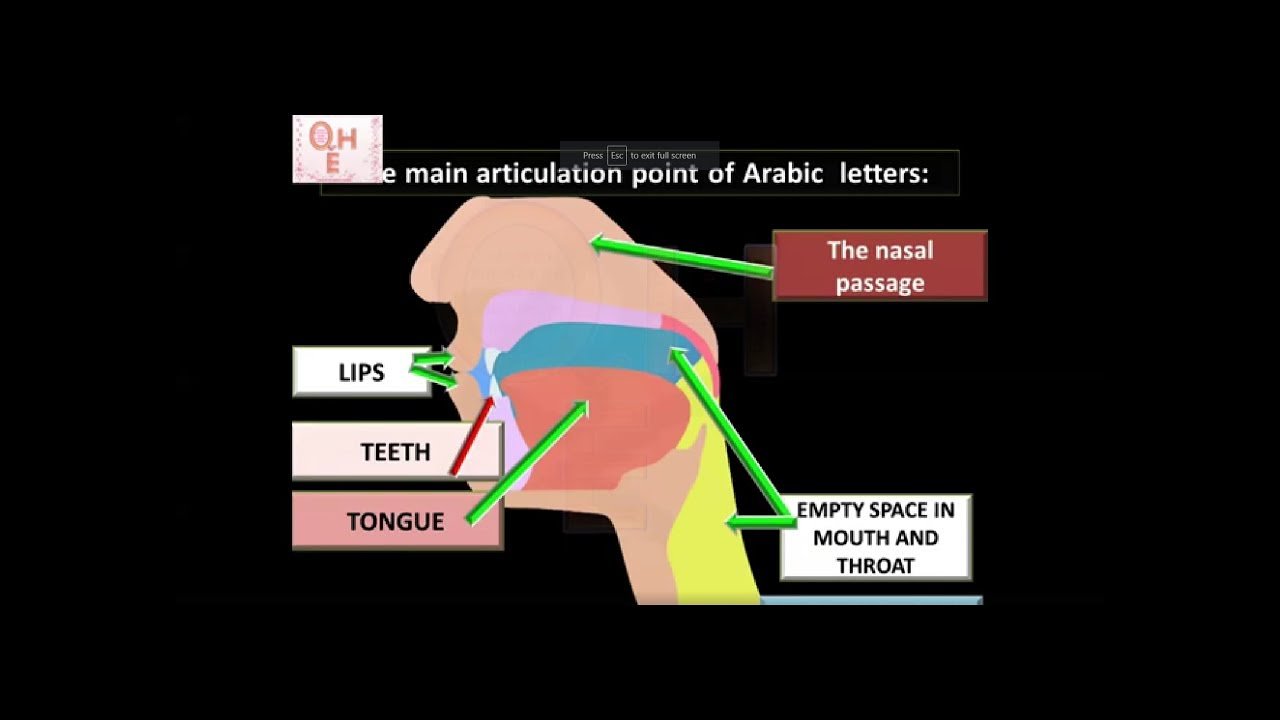
Before learning Sifaatul Huroof in detail, make sure you understand the difference between Makhaarij and Sifaat.
| Topic | Simple Meaning | Learning Question |
|---|---|---|
| Makhaarij al-Huroof | Where the Arabic letters come from | Am I using the correct articulation point? |
| Sifaatul Huroof | How the Arabic letters sound | Am I giving the letter its correct quality? |
Think of it like this: the makhraj gives the letter its place, and the sifat gives the letter its sound character.
If your Makhaarij are weak, your Sifaat will also be affected. For that reason, it is helpful to review Makhaarij al-Huroof and the articulation points of Arabic letters before studying the qualities in detail.
Step 2: Learn the Meaning Before Memorizing the List
Many students start by memorizing the full list of Sifaat. That can help later, but it is not always the best first step.
Start with simple meanings. Ask yourself:
- Does this quality affect breath?
- Does it affect strength or softness?
- Does it affect heaviness or lightness?
- Does it create a bounce, whistle, spread, or extension?
- Can I hear it in a teacher’s recitation?
When the meaning is clear, the Arabic term becomes easier to remember. Without meaning, the terms may feel like disconnected vocabulary.
Understand first, then memorize with sound.
Step 3: Study One Group of Sifaat at a Time
Do not try to learn every Sifah in one sitting. That usually creates confusion. A better method is to study the topic in groups.
Start with Sifaatul Huroof with Opposites
Begin with the qualities that are easier to compare. For example, Hams and Jahr can be studied together because one involves breath flow while the other is more held. Shiddah and Rikhawah can be studied together because one blocks the sound while the other allows it to flow.
This comparison helps your ear notice differences. You are not only learning a term; you are learning a contrast.
For a focused explanation, read Sifaatul Huroof with Opposites.
Then Study Sifaatul Huroof without Opposites
After that, move to the qualities that do not have direct opposites, such as Qalqalah, Safeer, Leen, Takreer, Tafashee, and Istitalah.
These qualities need careful listening because many students either remove them completely or exaggerate them. For example, Qalqalah should be clear, but it should not sound like an extra vowel.
You can study this group in Sifaatul Huroof without Opposites.
Step 4: Practice With Sound, Not Definitions Only
Sifaatul Huroof cannot be mastered silently. Reading definitions helps, but the real learning happens when you hear the quality and try to reproduce it.
For example, if you are learning Qalqalah, do not only read that it is a bounce or echo. Listen to a teacher pronounce the letters, then repeat slowly. If you are learning Safeer, listen for the natural sharpness in the sound without forcing it.
| Weak Method | Better Method |
|---|---|
| Reading a definition once | Listening to examples and repeating after a teacher |
| Memorizing all names quickly | Learning one group at a time with practice |
| Practicing isolated letters only | Applying the quality inside Quran words |
Adult learners often improve faster when they stop trying to “finish the chart” and start focusing on one sound correction at a time.
Step 5: Apply Sifaatul Huroof Inside Quran Words
After practicing individual letters, move into Quran words. This step is important because a quality may sound easy in isolation but become weaker during actual recitation.
A student may pronounce a heavy letter correctly alone, then lose the heaviness inside a verse. Another student may produce Qalqalah clearly in practice, then exaggerate it when stopping on a word.
Use this simple movement:
- Letter level: Practice the single letter slowly.
- Word level: Practice the letter inside short words.
- Phrase level: Practice short Quran phrases.
- Recitation level: Read naturally while keeping the quality balanced.
This is where many students need patience. Do not expect the quality to become stable immediately. It may take several lessons before the correction becomes natural.
Step 6: Get Teacher Feedback Before Mistakes Become Habits
A major challenge with Sifaatul Huroof is that students often cannot hear their own mistakes. They may think the sound is correct because they have repeated it that way for years.
A teacher can identify whether the problem is:
- wrong makhraj,
- missing sifat,
- exaggerated sifat,
- weak listening,
- or rushing during recitation.
For adults who want guided correction instead of studying Tajweed alone, Quran Classes for Adults at Asawer Academy can help you work on pronunciation, Makhaarij, Sifaat, and recitation step by step with teacher feedback.
A Simple Weekly Plan to Learn Sifaatul Huroof
You do not need a complicated schedule. What you need is consistency. The following plan is simple enough for a busy adult learner.
| Day | Focus | Practice Time |
|---|---|---|
| Day 1 | Review the meaning of one quality | 10 minutes |
| Day 2 | Listen to teacher examples | 10 minutes |
| Day 3 | Repeat isolated letters slowly | 10 minutes |
| Day 4 | Practice short Quran words | 10 minutes |
| Day 5 | Read a short passage with focus | 10 minutes |
| Weekend | Review teacher notes and repeat corrections | 15 minutes |
The aim is not to rush. The aim is to make the ear and tongue more aware, one quality at a time.
Common Mistakes to Avoid While Learning Sifaatul Huroof
Mistake 1: Trying to Learn All Sifaat in One Day
This usually leads to confusion. Study one group, practice it, then move to the next.
Mistake 2: Ignoring Makhaarij
If the letter comes from the wrong place, its quality will not sound right. Makhaarij and Sifaat should support each other.
Mistake 3: Practicing Without Listening
Some students repeat sounds without comparing them to a teacher’s model. This can strengthen the wrong habit.
Mistake 4: Exaggerating the Quality
When students finally hear a quality, they may overdo it. Heavy letters become too heavy, Qalqalah becomes too bouncy, and Safeer becomes too sharp. Tajweed needs control.
Mistake 5: Measuring Progress Only by Speed
Fast recitation is not the goal. Clear and correct recitation comes first. Speed can improve later.
How Asawer Academy Helps Adults Learn Tajweed Step by Step
At Asawer Academy, adult learners can study Tajweed in a practical way that matches their current level. The teacher can listen carefully, identify repeated pronunciation issues, and help the student understand whether the correction is related to Makhaarij, Sifaat, or fluency.
If you want structured support rather than random self-study, you can explore guided online Quran classes for adult learners and begin with a level that suits your recitation.
Book Your Free Trial Class Now at Asawer Academy
Continue the Sifaatul Huroof Series
This article gives you the learning method. To complete your understanding, use the full series in this order:
- Start with the main Sifaatul Huroof guide to understand the full topic.
- Study Sifaatul Huroof with Opposites to learn paired qualities such as Hams and Jahr.
- Review Sifaatul Huroof without Opposites for qualities such as Qalqalah, Safeer, Tafashee, and Istitalah.
When these articles are studied together, they help you move from understanding to practice.
Quick Review Checklist
Use this checklist while learning Sifaatul Huroof:
- Did you review the difference between Makhaarij and Sifaat?
- Are you learning the meaning before memorizing the list?
- Are you studying one group of qualities at a time?
- Are you listening to examples before repeating?
- Are you practicing inside Quran words?
- Are you avoiding exaggeration?
- Are you getting teacher feedback?
- Are you reviewing corrections regularly?
If your answer is “not yet” to some of these points, that is fine. Sifaatul Huroof is a skill. Skills improve through patient correction, not pressure.
FAQ About How to Learn Sifaatul Huroof
How should I start learning Sifaatul Huroof?
Start by understanding the difference between Makhaarij and Sifaat. Then learn one group of qualities at a time, listen to examples, and practice them inside Quran words.
Should I learn Makhaarij before Sifaatul Huroof?
Yes, it is better to have a basic understanding of Makhaarij first because the correct articulation point helps the letter quality sound more accurate.
Can I learn Sifaatul Huroof by memorizing a chart?
A chart can help you organize the terms, but it is not enough. Sifaatul Huroof must be learned through listening, repetition, teacher correction, and real recitation.
How long does it take to learn Sifaatul Huroof?
The time differs from one student to another. Some learners understand the basic meanings quickly, but applying the qualities correctly in recitation usually takes steady practice and feedback.
What is the easiest Sifah to start with?
Many students find it easier to start with clear examples such as Hams and Jahr or Qalqalah because these qualities can be heard more clearly with teacher guidance.
Why do I understand Sifaatul Huroof but still make mistakes?
Understanding the rule is different from applying it during recitation. Your tongue and ear need practice before the correction becomes natural.
Do adults need a teacher to learn Sifaatul Huroof?
A teacher is highly helpful because many Sifaat mistakes are hard to hear by yourself. Teacher feedback can correct small errors before they become habits.
Does Asawer Academy teach Sifaatul Huroof step by step?
Yes. Asawer Academy helps adult Quran learners study Tajweed topics such as Makhaarij and Sifaat through guided recitation practice.
Are Quran Classes for Adults suitable for beginners in Tajweed?
Yes. Quran Classes for Adults can suit learners who need help with pronunciation, Tajweed basics, and gradual correction according to their current level.
Can I book a free trial class before joining?
Yes. You can book a free trial class at Asawer Academy to assess your recitation and understand the best starting point for your learning path.