Ikhfaa is one of the most important rules of Noon Sakinah and Tanween in Tajweed. Many students can memorize the Ikhfaa letters, but they still find it difficult to produce the correct sound. That is because Ikhfaa is not just a list of letters. It is a sound between clear pronunciation and complete merging. The Noon sound is hidden, and Ghunnah is kept. This guide explains the meaning of Ikhfaa, the 15 Ikhfaa letters, examples with Noon Sakinah and Tanween, common mistakes, and simple practice steps for children and beginners.
Quick answer: Ikhfaa means hiding. It happens when Noon Sakinah or Tanween is followed by one of the 15 Ikhfaa letters. The Noon sound is hidden with Ghunnah, without being pronounced fully clear and without being fully merged into the next letter.
What Is Ikhfaa in Tajweed?
Ikhfaa means hiding or concealment. In Tajweed, Ikhfaa means hiding the sound of Noon Sakinah or Tanween when it is followed by one of the Ikhfaa letters.
The sound is not pronounced clearly like Izhar. It is also not merged completely like Idgham. Instead, it is hidden with Ghunnah.
نْ + Ikhfaa letter = hidden Noon sound with Ghunnah
This is why Ikhfaa needs listening and correction. A student may know the rule in theory, but the sound still needs practice.
Teacher observation: Ikhfaa is often harder than Izhar, Idgham, and Iqlab because the student must control a sound that is neither fully clear nor fully merged. Children usually need repeated listening before they can apply it naturally.
Ikhfaa as One of the Noon Sakinah and Tanween Rules
Ikhfaa belongs to the larger group of Noon Sakinah and Tanween rules. These rules explain how the Noon sound changes depending on the letter that comes after it.
The four rules are:
Izhar – Idgham – Iqlab – Ikhfaa
Each rule changes the sound in a different way:
- Izhar: the Noon sound is clear.
- Idgham: the Noon sound merges into the next letter.
- Iqlab: the Noon sound changes toward a hidden Meem sound before ب.
- Ikhfaa: the Noon sound is hidden with Ghunnah.
If you need the full overview of all four rules, start with the main guide to Noon Sakinah and Tanween rules in Tajweed, then return to this article for the detailed Ikhfaa explanation.
How Many Ikhfaa Letters Are There?
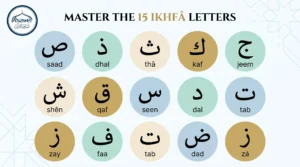
There are 15 Ikhfaa letters. This is why Ikhfaa takes more time to learn than Iqlab, which has only one letter, or Izhar and Idgham, which each have six letters.
However, children should not be forced to memorize all 15 letters in one sitting. It is better to learn them through examples, repetition, and short groups.
The 15 Ikhfaa Letters
The 15 Ikhfaa letters are:
ت – ث – ج – د – ذ – ز – س – ش – ص – ض – ط – ظ – ف – ق – ك
When one of these letters comes after Noon Sakinah or Tanween, the rule is Ikhfaa.
A common Arabic line used to remember the Ikhfaa letters is:
صِفْ ذَا ثَنَا كَمْ جَادَ شَخْصٌ قَدْ سَمَا
دُمْ طَيِّبًا زِدْ فِي تُقًى ضَعْ ظَالِمًا
This line is useful for memorization, but students still need practice with real Quran words. Memorizing the letters alone does not guarantee correct pronunciation.
| Rule | Number of Letters | Main Sound Feature |
|---|---|---|
| Ikhfaa | 15 letters | The Noon sound is hidden with Ghunnah. |
How Ikhfaa Works with Noon Sakinah
Noon Sakinah is the Noon with Sukoon:
نْ
When Noon Sakinah is followed by one of the Ikhfaa letters, the Noon is hidden with Ghunnah.
Example with Noon Sakinah
مِنْ شَرِّ
Here, Noon Sakinah is followed by ش. Since ش is one of the Ikhfaa letters, the Noon sound is hidden with Ghunnah.
Another example:
مِنْ قَبْلِ
Here, Noon Sakinah is followed by ق, which is also an Ikhfaa letter. The Noon is not read clearly. It is hidden with Ghunnah.
Classroom correction: If a child reads مِنْ شَرِّ with a fully clear Noon, the teacher may say: “This is not Izhar. Hide the Noon sound and keep the Ghunnah.”
How Ikhfaa Works with Tanween
Tanween is a Noon sound at the end of a word. It appears in three forms:
ـً ـٍ ـٌ
Because Tanween carries a Noon sound, Ikhfaa can happen with Tanween too. If Tanween is followed by one of the 15 Ikhfaa letters, the Tanween sound is hidden with Ghunnah.
Example with Tanween
رِيحًا صَرْصَرًا
Here, Tanween is followed by ص, which is an Ikhfaa letter. The Tanween sound is hidden with Ghunnah.
Another example:
قَوْمًا طَاغِينَ
Here, Tanween is followed by ط, which is also an Ikhfaa letter. The Tanween sound is not read as a clear Noon. It is hidden with Ghunnah.
For beginners, it helps to remember that Tanween is not just a vowel mark. It carries a Noon sound, so it follows the same rules as Noon Sakinah.
For a beginner-friendly explanation, review Tanween in Quran: meaning, signs, pronunciation, and examples.
Does Ikhfaa Have Ghunnah?
Yes, Ikhfaa has Ghunnah. Ghunnah is the nasal sound that comes from the nose. In Ikhfaa, the Noon sound is hidden, but the Ghunnah remains.
Children often make two opposite mistakes with Ghunnah:
- They hide the Noon but forget the Ghunnah.
- They exaggerate the Ghunnah too much and make the sound heavy or unnatural.
The goal is a controlled sound. The student should not pronounce a fully clear Noon, and should not merge the sound completely into the next letter.
Teacher observation: Ikhfaa is best learned by hearing examples from a teacher. A chart can show the letters, but only listening practice teaches the correct balance between hiding the Noon and keeping Ghunnah.
Ikhfaa Examples with Clear Explanation
The table below gives practical Ikhfaa examples. The goal is to help students notice the letter after Noon Sakinah or Tanween and understand why the rule is Ikhfaa.
| Example | Type | Ikhfaa Letter | What to Notice |
|---|---|---|---|
| مِنْ شَرِّ | Noon Sakinah | ش | The Noon sound is hidden with Ghunnah. |
| مِنْ قَبْلِ | Noon Sakinah | ق | The Noon is not fully clear. |
| رِيحًا صَرْصَرًا | Tanween | ص | The Tanween sound is hidden with Ghunnah. |
| قَوْمًا طَاغِينَ | Tanween | ط | The Tanween is hidden before ط. |
Ikhfaa vs Izhar, Idgham, and Iqlab
Students understand Ikhfaa better when they compare it with the other Noon Sakinah and Tanween rules.
| Rule | What Happens to the Noon Sound? | Beginner Reminder |
|---|---|---|
| Izhar | The Noon is clear. | Show the Noon clearly. |
| Idgham | The Noon merges. | Check if Ghunnah is needed. |
| Iqlab | The Noon changes toward hidden Meem. | Look for ب. |
| Ikhfaa | The Noon is hidden with Ghunnah. | Not clear, not merged, not changed to Meem. |
To compare all four rules together, return to the main guide on Noon Sakinah and Tanween rules.
Common Mistakes Students Make with Ikhfaa
Ikhfaa mistakes usually happen because the student knows the letters but has not yet mastered the sound. Here are the mistakes teachers often hear.
1. Pronouncing the Noon Clearly
Some students read Ikhfaa examples as if they were Izhar. They show the Noon clearly before an Ikhfaa letter. This makes the rule incorrect.
2. Merging the Noon Completely
Other students hide the Noon too much and make it sound like complete merging. Ikhfaa is not full Idgham. The sound should be hidden, but not fully merged.
3. Forgetting Ghunnah
Ikhfaa needs Ghunnah. If the student hides the Noon but removes the nasal sound, the recitation loses an important part of the rule.
4. Exaggerating Ghunnah
Some children hold the nasal sound too strongly or for too long. The teacher should help the child keep the Ghunnah controlled and natural.
5. Confusing Ikhfaa with Iqlab
Both Ikhfaa and Iqlab involve a hidden sound with Ghunnah, but they are not the same. Iqlab happens only before ب, while Ikhfaa happens before 15 different letters.
How Kids Can Practice Ikhfaa at Home
Ikhfaa should be practiced slowly. Children should not begin with all 15 letters at once. Start with small groups and simple examples.
Practice Step 1: Find Noon Sakinah or Tanween
Ask your child to look for:
نْ
or one of the Tanween signs:
ـً ـٍ ـٌ
Practice Step 2: Check the Next Letter
Ask:
Is the next letter one of the Ikhfaa letters?
Then review a small group only:
ت – ث – ج – د – ذ
Next time, use another group. This is easier than memorizing all 15 letters at once.
Practice Step 3: Use Short Examples
Practice two or three examples only:
مِنْ شَرِّ
مِنْ قَبْلِ
رِيحًا صَرْصَرًا
Practice Step 4: Listen for the Hidden Sound
Ask your child: “Was the Noon fully clear, fully merged, or hidden?” This question helps the child hear the difference between Ikhfaa and the other rules.
Parent tip: Do not correct every Tajweed detail at once. If today’s lesson is Ikhfaa, focus only on hiding the Noon sound with Ghunnah. Leave other mistakes for another session.
How Asawer Academy Helps Children Apply Ikhfaa Correctly
Ikhfaa is a sound-based rule. A child may memorize the 15 letters but still need a teacher to hear whether the Noon is hidden correctly, whether the Ghunnah is present, and whether the sound is not exaggerated.
If your child is learning Tajweed and needs help applying Ikhfaa, Noon Sakinah, Tanween, and Ghunnah rules correctly, you can explore online Quran classes for kids at Asawer Academy. A teacher can listen to your child’s recitation, correct pronunciation, and give simple practice steps based on their level.
Book Your Free Trial Class Now at Asawer Academy
Where to Go Next
This article focused only on Ikhfaa. After understanding this rule, students can review the other Noon Sakinah and Tanween rules to see the full picture.
- To review clear pronunciation, read Izhar in Tajweed.
- To understand merging, read Idgham in Tajweed.
- To understand the hidden Meem sound before ب, read Iqlab in Tajweed.
- For the full rule group, return to Noon Sakinah and Tanween rules.
FAQ About Ikhfaa Letters in Tajweed
What is Ikhfaa in Tajweed?
Ikhfaa in Tajweed means hiding the sound of Noon Sakinah or Tanween when it is followed by one of the Ikhfaa letters, while keeping Ghunnah.
What does Ikhfaa mean?
Ikhfaa means hiding or concealment. In Tajweed, it refers to hiding the Noon sound with Ghunnah.
How many Ikhfaa letters are there?
There are 15 Ikhfaa letters.
What are the Ikhfaa letters?
The Ikhfaa letters are ت، ث، ج، د، ذ، ز، س، ش، ص، ض، ط، ظ، ف، ق، ك.
Does Ikhfaa happen with Noon Sakinah?
Yes. Ikhfaa happens when Noon Sakinah is followed by one of the 15 Ikhfaa letters.
Does Ikhfaa happen with Tanween?
Yes. Since Tanween carries a Noon sound, Ikhfaa also happens when Tanween is followed by one of the Ikhfaa letters.
Does Ikhfaa have Ghunnah?
Yes. Ikhfaa is pronounced with Ghunnah. The Noon sound is hidden, but the nasal sound remains.
What is an example of Ikhfaa?
An example of Ikhfaa is مِنْ شَرِّ because Noon Sakinah is followed by ش, which is one of the Ikhfaa letters.
Is Ikhfaa the same as Iqlab?
No. Iqlab happens only before ب and changes the Noon sound toward a hidden Meem sound. Ikhfaa happens before 15 letters and hides the Noon sound with Ghunnah.
Why do children find Ikhfaa difficult?
Children often find Ikhfaa difficult because the sound is between clear pronunciation and complete merging. It needs listening practice and teacher correction.
Does Asawer Academy teach Ikhfaa in Tajweed?
Yes. Asawer Academy teaches Quran recitation and Tajweed for children, including Ikhfaa, Noon Sakinah, Tanween, and Ghunnah rules.
Can I book a trial class for my child?
Yes. You can book a free trial class at Asawer Academy so a teacher can check your child’s recitation and recommend a suitable learning plan.